
"Remove 'Nigerian' From Your CV to Get Hired": The Unconscious Bias Costing Qualified Immigrants Their Dream Jobs in Canada.
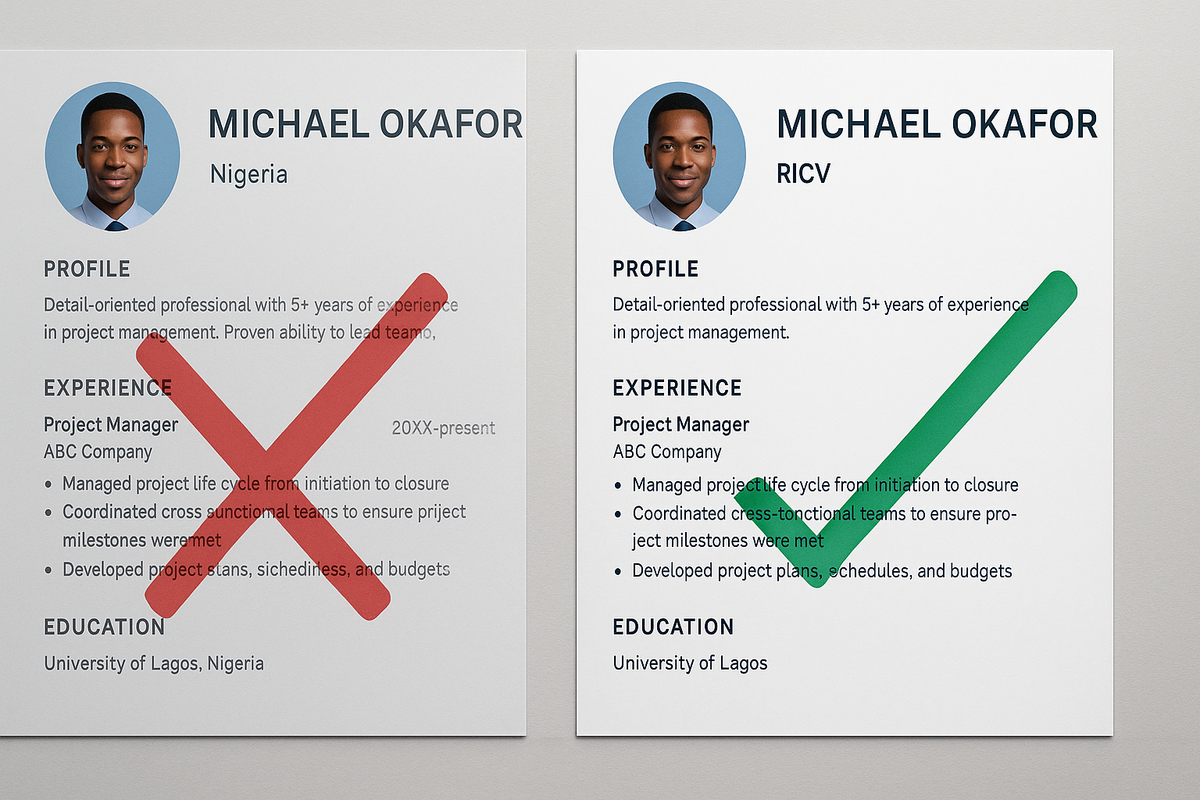
Why talented Nigerian professionals are erasing their identity just to get interviews and what needs to change in Canada's job market.
You spent years earning your degree. You've got the skills, the experience, the credentials. Your CV is solid. You apply for jobs you're more than qualified for.
And then... silence.
No callback. No interview. Not even a "thanks, but no thanks" email.
So you try something different. You remove "Lagos" from your education section. You take "Nigerian" off your LinkedIn. Maybe you even adjust your name to sound "less foreign."
And suddenly, the interviews start rolling in.
If this sounds familiar, you're not imagining things. And you're definitely not alone.
The Reality Many Won't Say Out Loud: Unconscious Bias in Canadian Hiring
Recent findings have confirmed what many Nigerian professionals in Canada have quietly suspected for years: unconscious bias is real, it's widespread, and it's costing talented immigrants opportunities they've earned.
According to a November 2025 report by Business Day, Nigerian immigrants in Canada are experiencing significant unconscious bias in the job market. The article highlights how qualified Nigerian professionals are being systematically overlooked during the hiring process not because they lack skills or experience, but due to deep-rooted biases in Canada's employment system.
Let that sink in.
You can have a Master's degree from a top Canadian university, five years of Canadian work experience, and fluent English. But if your CV clearly identifies you as Nigerian, it might never make it past the first screening stage.
What the Report Reveals: The Scope of Bias Against Nigerian Professionals
The Business Day investigation exposed several troubling patterns:
Hiring Discrimination Is Systematic
Nigerian job seekers and other racialized immigrants are being filtered out at the résumé stage, often before a human even reads their qualifications. Not because they lack skills. Not because their experience isn't relevant. But because of where they're from, what their name sounds like, or where they went to school.
The Identity Erasure Strategy Works
Many Nigerian professionals report that their interview rates improved dramatically after removing or de-emphasizing their Nigerian background from their CVs not because their qualifications changed, but because the perception did.
It's Not Just About Qualifications
The bias extends beyond paper credentials. Even with Canadian degrees and local work experience, Nigerian professionals face barriers related to names, accents, and perceived "cultural fit."
This isn't about merit. It's about bias. And according to the report, it's costing Canada some of its most talented workers.
The "Canadianize Your CV" Survival Strategy: Why Immigrants Hide Their Identity
This isn't new advice. Walk into any newcomer employment centre, and you'll hear some version of it:
- "Use a Canadian phone number format."
- "Only list Canadian work experience."
- "Maybe shorten your name to something easier to pronounce."
- "Don't mention your home country unless asked."
The intention behind this advice isn't malicious—it's survival. Employment counsellors have watched too many qualified immigrants get overlooked, and they're trying to help people get their foot in the door by any means necessary.
But here's the uncomfortable truth: we shouldn't have to erase parts of our identity just to get a fair chance.
Why This Matters for Nigerian Professionals in Canada: Common Job Search Challenges
If you're Nigerian in Canada, you've probably experienced some version of this:
The Overqualification Trap
You have a degree and 10 years of experience, but you're being offered entry-level roles because your experience "wasn't in Canada."
The Endless Canadian Experience Loop
You can't get Canadian experience without a Canadian job, but you can't get a Canadian job without Canadian experience.
The Name Game: Bias in Resume Screening
Your interview rate changes dramatically depending on how "Canadian" your résumé looks.
The Accent Tax
You nail the interview, but there's a subtle shift when they hear how you speak.
And the mental toll? Exhausting. You start second-guessing yourself. Is it my CV? My accent? My name? My experience? Am I not good enough?
Let's be clear: You are good enough. The system is broken, not you.
Understanding Unconscious Bias: Why It Happens
Unconscious bias (also called implicit bias) refers to attitudes or stereotypes that affect our understanding, actions, and decisions in an unconscious manner.
In hiring, this means:
Affinity Bias
Hiring managers tend to favor candidates who remind them of themselves or seem "familiar."
Name Bias
Studies consistently show that résumés with Anglo-sounding names receive more callbacks than identical résumés with ethnic names.
Accent Bias
Non-native accents are often unconsciously associated with lower competence, despite no correlation.
Education Bias
International degrees are often undervalued, even from prestigious institutions.
The Business Day report confirms that Nigerian professionals face multiple layers of these biases simultaneously.
What's Being Done to Address Hiring Bias in Canada (And What Should Be Done)
Some Canadian organizations and employers are starting to address this:
Current Initiatives Against Workplace Discrimination
Blind recruitment practices are removing names and schools from initial screenings to focus purely on skills.
Diversity hiring initiatives are actively seeking to address historical imbalances.
Bias training programs are being rolled out (though their effectiveness varies widely).
What Real Change Requires
But real change requires more than just training modules and good intentions. It requires:
- Overhauling AI hiring tools that perpetuate bias
- Expanding recognition of international credentials and experience
- Creating transparent hiring processes that can be audited for fairness
- Holding companies accountable for diversity outcomes, not just diversity statements
- Addressing unconscious bias at every level of the hiring process
Job Search Strategies for Nigerian Immigrants in Canada: What You Can Do Right Now
While we push for systemic change, here's how to protect yourself and increase your chances:
1. Network Strategically: Building Professional Connections in Canada
Many jobs are filled through referrals before they're even posted. Join professional associations, attend industry events, and connect with people in your field. A personal recommendation can bypass the biased screening process entirely.
Where to start:
- Nigerian Canadian Association chapters in your province
- Council of Nigerian Professionals (CNP)
- Nigerian & Canadian Business Network (NCBN)
- Industry-specific networking groups
- LinkedIn communities in your sector
- Newcomer employment programs with employer connections
2. Leverage Canadian Credentials to Overcome Bias
If you have the means, consider:
- Canadian certifications in your field
- Short courses at Canadian institutions (adds local education to your CV)
- Volunteer roles that give you Canadian references
- Contract work that builds local portfolio pieces
3. Master the "Translation" Game: How to Present International Experience
This shouldn't be necessary, but it works:
- Frame your international experience in Canadian business language
- Use Canadian metrics and terminology where possible
- Lead with results and achievements, not just titles
- Highlight any work with Canadian or multinational companies
- Consider how you present your education (e.g., "Bachelor of Engineering" before listing the Nigerian university)
4. Apply Strategically: Finding Inclusive Employers in Canada
Focus your energy where it's more likely to pay off:
- Companies with strong diversity track records
- Organizations that explicitly value international experience
- Sectors with skills shortages (tech, healthcare, trades)
- Smaller companies that do more personalized hiring
- Government positions with formal equity hiring policies
5. Build Your Own Brand: Creating Visibility Beyond Traditional Hiring
Create visibility that bypasses traditional hiring:
- Share your expertise on LinkedIn
- Contribute to industry publications or blogs
- Speak at events or webinars
- Build a portfolio that speaks for itself
- Start consulting or freelancing to build Canadian client references
For Nigerian Students in Canada: Start Your Job Search Early
If you're currently studying in Canada, you have a window of opportunity before you graduate:
- Get co-op placements or internships while you're still a student—they're more accessible than post-grad jobs
- Build Canadian references from professors, supervisors, volunteer coordinators
- Join professional student associations in your field
- Start networking before you need a job—relationships take time
- Document your Canadian experience thoroughly—every project, every achievement, every skill
- Connect with Nigerian student associations (NSA) at your school—they often have alumni networks
The Economic Cost of Hiring Bias: Why This Hurts Canada Too
This isn't just an immigrant issue—it's a Canadian competitiveness issue.
When qualified professionals can't get hired because of bias, Canada loses:
Lost Economic Potential
Underemployed immigrants represent billions in lost economic contribution. Nigeria has one of the most educated diaspora populations globally that talent should be fully utilized.
Reduced Innovation
Diverse teams consistently outperform homogeneous ones. Canadian companies miss out on global perspectives and innovative solutions.
Weakened Global Competitiveness
Other countries are actively recruiting the talent Canada is overlooking. The UK, Australia, and Germany are making it easier for Nigerian professionals to work there.
Damaged Social Cohesion
Nothing breeds resentment faster than a broken promise of meritocracy. When skilled immigrants can't find appropriate employment, it undermines Canada's multicultural model.
Brain Waste
According to various studies, Canada has one of the highest rates of credential underutilization among developed nations—meaning immigrants work in jobs below their skill level.
Canada markets itself globally as a land of opportunity where talent and hard work are rewarded. But as the Business Day report shows, if qualified Nigerian immigrants have to hide their backgrounds just to get an interview, that promise rings hollow.
Mental Health and Job Search Discrimination: Taking Care of Yourself
Let's talk about something that doesn't get mentioned enough: the psychological toll of constant rejection and self-erasure.
When you have to constantly downplay your achievements, question your worth, and wonder if your name is the reason you're not getting callbacks that does something to you.
Signs You May Need Support:
- Imposter syndrome despite strong qualifications
- Anxiety about job applications
- Depression from constant rejection
- Frustration with having to "prove yourself" more than others
- Loss of confidence in your abilities
- Anger at having to hide your identity
Know that these feelings are valid responses to an unjust situation. And you don't have to go through it alone.
Mental Health Resources for Immigrants in Canada:
- ConnexOntario - Mental health support (Ontario)
- Immigrant Services Society of BC (ISSofBC) - Employment and wellness programs
- Your school's career services if you're a student or recent graduate
- Canadian Mental Health Association - Immigrant-focused programs
- Access Alliance Multicultural Health - Culturally sensitive mental health services
- Settlement agencies across Canada offer free counseling
What Employers Need to Hear: The Business Case Against Bias
If you're a hiring manager or business owner reading this, here's your wake-up call:
When you filter out qualified candidates because of their name, accent, or educational background, you're:
- Shrinking your talent pool in a competitive market
- Missing out on diverse perspectives that drive innovation
- Risking your reputation as an inclusive employer
- Potentially violating human rights legislation
- Losing out to competitors who hire the best talent regardless of background
Action Steps for Employers to Reduce Hiring Bias:
- Audit your hiring process for bias - Review who gets interviewed and hired. Look for patterns.
- Implement blind résumé screening - Remove names, photos, addresses, and graduation dates from initial reviews.
- Standardize interviews - Use the same questions for all candidates to reduce subjective bias.
- Value international experience appropriately - Don't automatically discount non-Canadian experience.
- Train hiring teams on unconscious bias - But don't stop there—create accountability mechanisms.
- Create mentorship programs for newcomers - Help bridge the "Canadian experience" gap.
- Be transparent - Clearly define what "Canadian experience" actually means for your roles (often it's about regulations, software, or industry norms—things that can be learned).
- Track diversity metrics - You can't improve what you don't measure.
Moving Forward: From Survival to Thriving in Canada's Job Market
The goal isn't just to "survive" the Canadian job market by hiding who we are. The goal is to thrive in a system that recognizes and values what we bring.
That means:
- Continuing to speak up about bias when we see it
- Supporting other Nigerians and immigrants in their job search
- Building businesses and creating opportunities ourselves
- Demanding better from employers and policymakers
- Celebrating our backgrounds as strengths, not liabilities
- Documenting our experiences (like the Business Day report does)
- Connecting with advocacy organizations pushing for change
You Shouldn't Have to Choose Between Your Identity and Your Career
The fact that talented Nigerian professionals are having to "Canadianize" their CVs just to get interviews is a failure of the system, not a failure of the individuals.
As the Business Day report makes clear, this is about systemic barriers, not individual shortcomings.
Your Nigerian education isn't inferior. Your international experience isn't worthless. Your name isn't "too difficult." And your accent isn't unprofessional.
You are exactly what Canada said it needed when it invited you here.
The barriers you're facing aren't about merit—they're about bias. And while we work to dismantle those barriers, remember:
- Your qualifications are real
- Your experience has value
- Your persistence will pay off
- Your community has your back
- This is about the system, not about you
While You Build Your Career, We'll Help You Support Home
We know that even while you're navigating job hunting challenges in Canada, you're still supporting family back home. Whether it's school fees, medical bills, or just helping out, Paper makes sure your money gets there—fast, secure, and with the best rates.
Because you're already carrying enough. Your remittances shouldn't add to the stress.
👉 Send money home without stress—download Paper today
FAQs: Unconscious Bias and Job Searching in Canada
What is unconscious bias in hiring?
Unconscious bias in hiring refers to automatic, unintentional prejudices that affect hiring decisions. As reported by Business Day, this includes discrimination based on names, accents, international education, or immigrant status even when candidates have strong qualifications.
Should I remove my Nigerian background from my CV?
This is a deeply personal decision with no easy answer. Many Nigerian professionals report better interview rates after "Canadianizing" their CVs, but this shouldn't be necessary. Consider: highlight Canadian education/experience prominently, use a format that leads with skills and achievements, keep your international background but frame it strategically. The goal is to get past biased screening while staying true to yourself.
How can I prove I experienced hiring discrimination in Canada?
Proving discrimination is difficult but possible. Document everything: save job postings, rejection emails, and note interview experiences. If you believe you've experienced discrimination, contact the Canadian Human Rights Commission or your provincial human rights tribunal. Consider consulting an employment lawyer for serious cases.
What is the Canadian experience requirement really about?
"Canadian experience" often refers to work experience gained in Canada. However, many employers use this vaguely, sometimes as code for cultural fit or bias. Often, what they really need is understanding of Canadian business practices, regulations, or software—things that can be learned quickly. Always ask specifically what skills or knowledge they're seeking.
Are there organizations that help Nigerian immigrants find jobs in Canada?
Yes! Contact:
- Nigerian Canadian Association chapters in your province
- Council of Nigerian Professionals (CNP)
- Settlement agencies (ACCES Employment in Ontario, ISSofBC in BC, MOSAIC, etc.)
- Provincial newcomer employment services
- Nigerian student associations (if you're a student or recent graduate)
Does unconscious bias affect all immigrants equally?
No. Research shows that bias varies by country of origin, with racialized immigrants facing more barriers than European immigrants. The Business Day report specifically highlights challenges faced by Nigerian immigrants.
Can I file a complaint about hiring bias?
Yes. In Canada, you can file complaints with:
- Canadian Human Rights Commission (federal jurisdiction)
- Provincial human rights tribunals (most employers)
- Your union (if unionized) However, these processes can be lengthy and require evidence.
Will Canada's immigration policies change to address this?
Immigration policy and employment discrimination are separate issues. While Canada controls who enters, addressing workplace bias requires changes to employment practices, enforcement of existing human rights laws, and cultural shifts—all of which are ongoing challenges.
Take Action Today
Don't let this information discourage you—let it empower you with knowledge and strategy.
This week:
- Join one Nigerian professional network in your city
- Update your CV using the strategies above
- Reach out to three people in your industry for informational interviews
- Research five companies known for inclusive hiring
- Share this article with another Nigerian job seeker
Remember: Every successful Nigerian professional in Canada once faced these same barriers. Your breakthrough is coming.
Have you experienced bias in your job search? What strategies worked for you? Drop a comment below—your story might be exactly what someone else needs to hear.
And if this article resonated with you, share it. Someone in your network needs to know they're not alone, and they're not imagining things.
Related Reading:
- Canadian Degree but No Job? Here's What Nigerian International Students Can Do
- 3 Smart Side Hustles Nigerians in Canada Are Using to Make Extra Cash
- Entrepreneurial Opportunities for Nigerian Immigrants in Canada
- Understanding Canadian Banking: A Starter Guide for Nigerians Abroad
Sources: