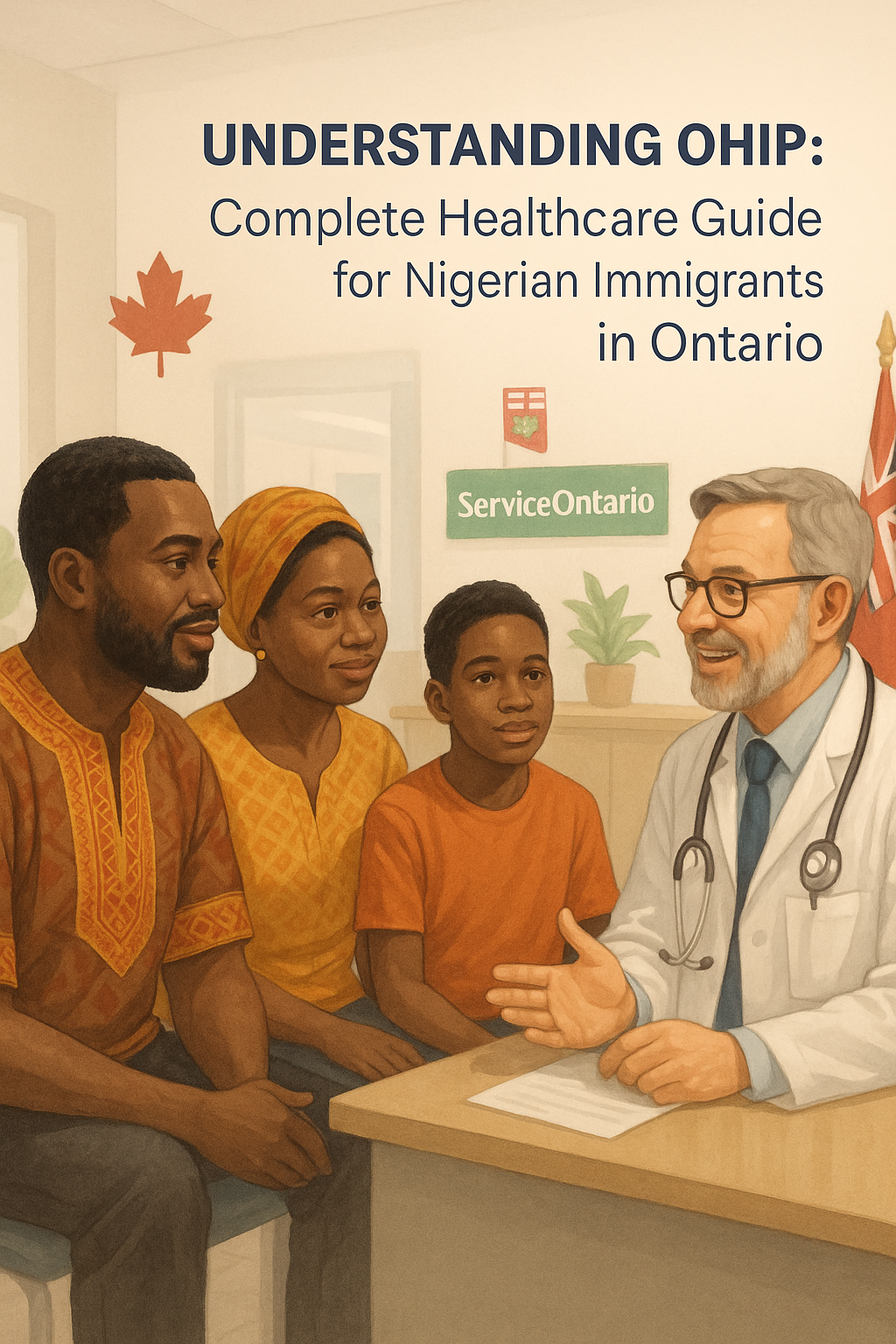
Understanding OHIP: Complete Healthcare Guide for Nigerian Immigrants in Ontario
You just landed in Ontario and trying to make sense of this thing called OHIP? Here’s the guide we wish someone dropped in the WhatsApp group on day one.
We’ll break down what OHIP covers, how to apply, what to do during the 3-month waiting period, and what happens if you’ll be out of Canada for a while. We’ll also compare Canada’s healthcare system with Nigeria’s so it actually makes sense.
By the end, you’ll know how to:
✅ Get your OHIP card
✅ Find Nigerian or African doctors who understand you
✅ Avoid surprise medical bills
✅ Navigate the system confidently
What Is OHIP and Who Qualifies?
OHIP (Ontario Health Insurance Plan) is the government-funded health coverage that helps you access medical care in Ontario without paying huge hospital or clinic bills.
To qualify for OHIP, you must:
- Live in Ontario and make it your primary home
- Be physically present in Ontario for at least 153 days in a 12-month period
- Have eligible immigration status (like permanent residency or a valid work permit)
You can learn more here:
👉 Apply for OHIP at ServiceOntario
What OHIP Covers (and What It Doesn’t)
Think of OHIP as your healthcare foundation. It covers medically necessary services so you’re not stuck with a massive bill for emergencies or hospital visits.
What OHIP Covers
You’re covered for things like:
- Visits to family doctors and walk-in clinics
- Emergency room care and hospital stays
- Medically necessary surgeries
- X-rays, lab tests, and diagnostic scans
- Maternity care and hospital deliveries
- Specialist appointments (with a referral)
What OHIP Doesn’t Cover
You’ll have to pay for:
- Prescription drugs outside the hospital
- Dental care and most dental surgeries
- Eye exams, eyeglasses, and contact lenses
- Ambulance rides (in most cases)
- Cosmetic or elective procedures
💡 Tip: Most newcomers pair OHIP with private insurance from work or buy short-term coverage to handle dental, vision, and prescriptions until they get employer benefits.
The 3-Month OHIP Waiting Period: What to Do
There’s usually a waiting period of up to three months before your OHIP kicks in. Don’t stress — here’s how to prepare.
- Apply immediately: Go to a ServiceOntario office with your ID, immigration documents, and proof of address.
- Buy temporary insurance: Get short-term private health insurance to cover emergencies while you wait.
- Use community health centres: Some centres treat newcomers on a sliding-scale basis or even for free.
Tip: OHIP coverage starts based on eligibility, not when you apply so do it as soon as you arrive.
If You’ll Be Outside Canada for 7+ Months
If you’ll be outside Canada for more than seven months in a 12-month period, you need to inform OHIP before leaving. Not doing so can affect your eligibility when you return.
Here’s what to do:
- Notify OHIP before your trip.
- Keep proof of Ontario residency (like bills or a lease).
- Buy travel or international medical insurance for the period you’ll be away.
Failing to update OHIP could mean losing coverage and having to re-establish residency later which can be a headache.
👉 Read: OHIP coverage while outside Canada
Canada vs Nigeria: How the Systems Really Compare 🇨🇦 vs 🇳🇬
Here’s what to expect if you’re coming from Nigeria.
In Canada, healthcare is publicly funded through taxes. You won’t pay at the hospital or clinic for covered services, but you’ll likely need private insurance for things like prescription drugs, dental care, and eye exams.
In Nigeria, the system is mixed. Many people pay out of pocket or rely on the National Health Insurance Authority (NHIA) or private plans. You can usually walk into a private clinic or see a specialist directly, but costs depend on what you can afford.
Access also feels different. In Canada, most people go through a family doctor for general care and referrals to specialists. It’s a structured process meant to manage your care but it can feel slow at first. In Nigeria, you can often skip straight to a specialist or a private doctor without referrals.
Wait times are another big difference. Canada prioritizes emergency and urgent cases, but non-urgent specialist care can take weeks or months. In Nigeria, private care is faster if you can pay for it.
The good news? Once you understand how to navigate the Canadian system, it becomes much easier and you’ll rarely have to worry about large medical bills for covered care.
How to Find Nigerian or African Doctors in Ontario
You don’t have to start from zero — there are many Nigerian and African doctors across Ontario. Here’s how to find them:
- Health Care Connect: Register online, and the province will help match you with a family doctor near you.
- CPSO Doctor Directory: Use the College of Physicians and Surgeons of Ontario directory to search by city, specialty, or name.
- Community networks: Ask around in Nigerian Facebook groups, WhatsApp groups, churches, mosques, or even African grocery stores. Word of mouth goes a long way.
- Walk-in clinics: Call ahead to ask if any doctors are accepting new patients and if they have experience serving West African communities.
When calling, ask questions like:
- “Are you accepting new patients?”
- “Does any doctor have experience with Nigerian or West African patients?”
- “Do you allow longer first visits for new patients?”
If you ever feel rushed or not listened to, you can always switch doctors. Your care should feel respectful and collaborative.
Your OHIP Checklist
Documents You’ll Need
- Proof of identity
- Proof of immigration status
- Proof of Ontario residency
To-Dos
- Apply for OHIP right away
- Get temporary health insurance for the waiting period
- Start searching for a family doctor now
- Keep all medical receipts before OHIP starts
Common Questions About OHIP
Does OHIP cover medications?
Not outside the hospital. Check if your employer plan covers prescriptions or explore Ontario’s drug programs.
Is dental covered?
No — not for adults. You’ll need private coverage for that.
Can I see a specialist directly?
Usually, you need a referral from your family doctor.
What about cosmetic surgery?
Only medically necessary procedures are covered.
I’m traveling back home — will I lose my OHIP?
Possibly, if you’re away too long and don’t notify OHIP. Let them know before leaving and keep proof of your Ontario residency.
If You’re New-New, Start Here This Week
✅ Apply for OHIP at ServiceOntario
✅ Buy short-term health insurance for the waiting period
✅ Sign up for Health Care Connect to find a doctor
✅ Join one Nigerian community group in your city and ask for doctor recommendations
✅ Save this article for when you need referrals or healthcare contacts
You’ll build your healthcare support network faster than you think, the same way you’ll find your barber, tailor, or mechanic: one trusted recommendation at a time.